
Stones of the Western Wall: 3,000 Years of Prayer
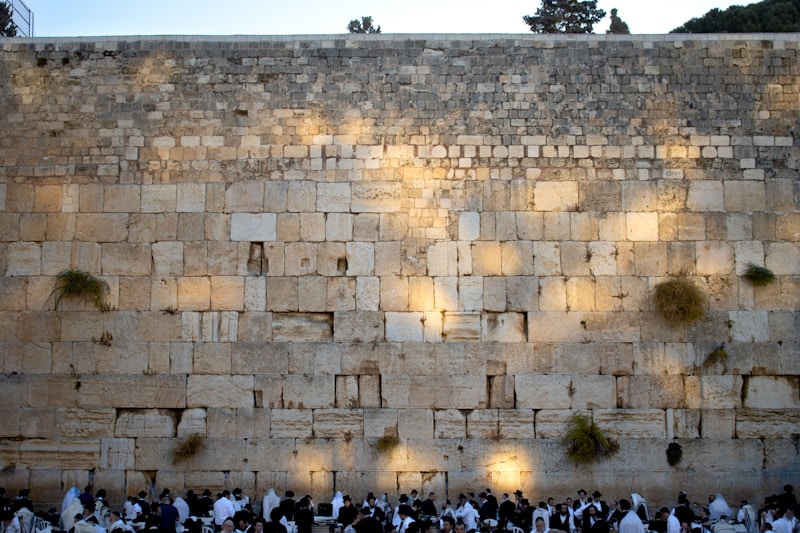
The Western Wall—known in Hebrew as the Kotel—is more than an ancient ruin. It is a living cathedral of prayer, a place where the tears of kings, exiles, mothers, and pilgrims have soaked into the same golden limestone for nearly three millennia.
What the Wall Actually Is
Contrary to popular belief, the Western Wall is not a remnant of the Temple itself. It is a section of the retaining wall King Herod built around 20 BCE to expand the Temple Mount platform. When the Second Temple was destroyed by the Romans in 70 CE, this outer wall alone survived—a divine sign, many believe, that God's presence had not fully departed from Jerusalem.
Its stones are massive. Some weigh over 500 tons. They have stood witness to Roman legions, Byzantine armies, Crusader kings, and Ottoman sultans—and outlasted them all.
Why Prayers Are Placed Between the Stones
The tradition of tucking written prayers into the cracks of the Wall is centuries old, though its exact origin is debated. Some trace it to the 18th century, when the great Kabbalist Rabbi Chaim ibn Attar instructed his students to leave written petitions at holy sites. Others believe the practice grew organically from pilgrims who traveled thousands of miles and wanted to leave something of themselves behind.
Today, over a million paper notes—kvitlach in Yiddish—are placed each year. Twice annually, the notes are collected with reverence and buried on the Mount of Olives, so that no prayer is ever discarded.
The Sacredness of a Written Prayer
There is something profound about writing a prayer down.
It slows us. In a world of instant messages and one-tap emojis, taking a pen to paper forces stillness.
It commits. A spoken prayer floats away. A written one is a covenant. You cannot unsay what you have written.
It joins a lineage. When your paper touches those stones, it rests among the prayers of hundreds of thousands who came before you—all crying the same eternal words: help, thank you, please, forgive.
Who Prays There
The Western Wall does not belong to one people. Yes, it is Judaism's holiest accessible site. But visitors of every faith come to it. Christian pilgrims following the footsteps of Jesus—who himself would have prayed near these very stones. Muslim visitors who recognize the deep spiritual weight of the location. Secular tourists who feel something they cannot name and reach for a scrap of paper.
The Wall does not ask what you believe. It only asks that you come with an honest heart.
When You Cannot Go Yourself
For those who cannot travel to Jerusalem—for reasons of health, cost, family, or circumstance—the tradition of sending prayers to the Wall through others is also ancient. Rabbis in the Middle Ages carried the requests of their congregations. Pilgrims returned home with commissions from those who stayed behind.
Today, when you send a prayer to the Western Wall through Jerusalem Holy Prayer, you are participating in that same tradition. Your written words—hand-carried, physically placed, photographed as proof—join the great, unbroken conversation between heaven and earth that has echoed at those stones for three thousand years.
Conclusion
The Western Wall does not promise miracles. It offers something rarer: the certainty that your prayer has been placed exactly where the prayers of generations before you have been placed. That your words rest against the same warm limestone that has heard the whispered petitions of shepherds, exiles, warriors, mothers, and orphans across the centuries. In a fractured world, this quiet continuity is its own form of grace.
More Articles
Sacred Ground: Understanding Jerusalem's Christian Heritage
Journey through centuries of faith as we explore the profound spiritual significance of Jerusalem's most revered Christian sanctuaries.
Finding Peace Through Prayer: A Modern Guide
Discover how ancient prayer practices can bring profound peace and meaning to our contemporary lives.